
Mid-Century Modern Bedroom Furniture in Solid Wood: What to Look for Before Buying
Table Of Contents

Mid-century modern bedroom furniture is known for clean lines, warm wood tones, and practical storage. From walnut dressers to teak nightstands, these pieces can bring character to a bedroom without making it feel crowded or overly decorated.
But finding the right furniture takes more than choosing a style you like. You also need to understand the materials, inspect the construction, and make sure each piece fits your room.
And while solid wood is appealing, it isn't the only material used in quality mid-century furniture. Many well-made vintage pieces combine solid wood with genuine wood veneers and plywood.
Here's what to look for when choosing mid-century modern wood bedroom furniture for your home.
What Does a Mid-Century Modern Bedroom Look Like?
Mid-century modern design developed during the middle decades of the twentieth century, emphasizing useful forms and relatively restrained decoration.
In a bedroom, that often means:
Low-profile wooden beds with simple headboards.
Dressers with clean fronts and integrated or understated handles.
Tapered or splayed legs that expose the floor beneath furniture.
Compact nightstands with practical storage.
Natural wood grain used as a prominent design feature.
You don't need every piece to come from the same period. A vintage walnut dresser can complement a contemporary bed, while teak nightstands can work beside a simple upholstered headboard.
The goal is a comfortable bedroom where the furniture's proportions and materials provide visual interest.
Which Woods Work Best for Mid-Century Bedroom Furniture?
Teak, walnut, oak, ash, and maple are all associated with mid-century furniture. Their different colors and grain patterns can significantly change how a bedroom feels.
Wood | Typical appearance | Bedroom styling considerations |
Teak | Golden to medium brown | Adds warmth and pairs well with cream or muted green textiles. |
Walnut | Medium to dark brown | Creates contrast against light walls and bedding. |
Oak | Light tan to medium brown | Works well in bright, understated interiors. |
Ash | Pale cream to light brown | Helps maintain a lighter visual palette. |
Maple | Creamy white to light reddish brown | Can complement smaller rooms or minimalist bedrooms. |
These are general characteristics, not reliable identification tests. Finishes, aging, and lighting can change how a wood species appears.
For more detail on wood characteristics, consult The Wood Database, which documents the appearance and physical properties of different species.
When choosing bedroom furniture, prioritize the tone that works with your existing flooring and furnishings. You don't need to match every wooden surface exactly.
Solid Wood vs. Veneer: What Should You Choose?
One of the biggest misconceptions about vintage furniture is that solid wood is always superior to veneer.
In reality, both can be part of well-made furniture.
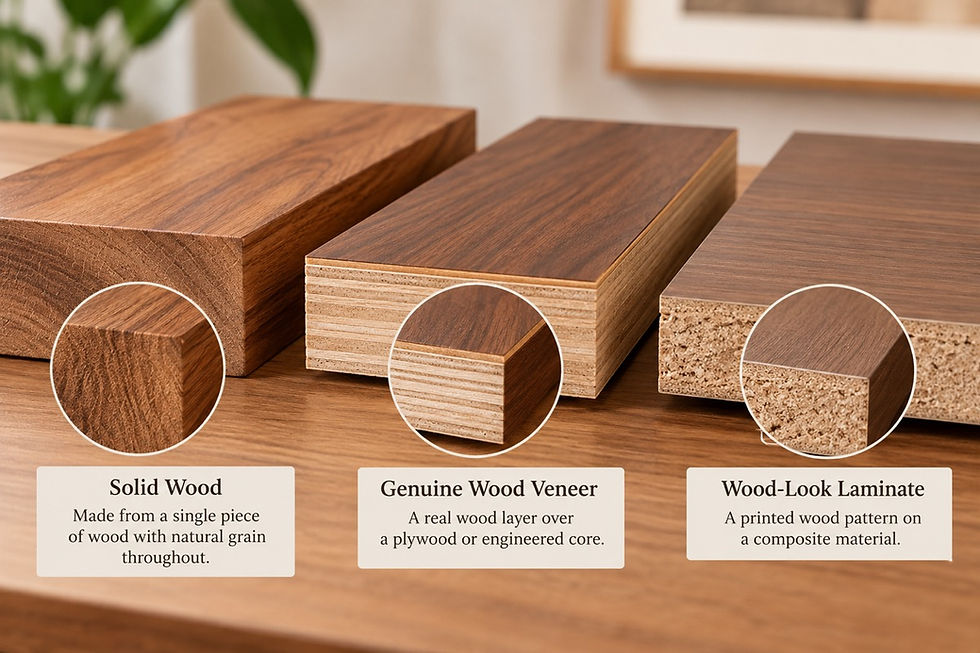
Solid wood is timber used throughout a component. Depending on its construction and finish, it may allow for repeated repairs or refinishing.
Wood veneer is a thin layer of real wood applied to a supporting material. Quality veneer allows furniture makers to create consistent surfaces and use attractive grain patterns.
Plywood consists of bonded layers of wood. It can provide useful dimensional stability and is a legitimate furniture-making material.
Printed laminate is different from genuine wood veneer. It reproduces the appearance of wood without using a natural wood surface.
A vintage dresser with walnut veneer over a stable substrate can be an excellent piece of furniture. Its quality depends on the overall construction and condition, not simply whether every surface is solid timber.
When inspecting a dresser or nightstand, check for lifting veneer, swelling, loose joints, and damaged edges.
How to Check the Quality of Vintage Bedroom Furniture
A beautiful exterior doesn't always reveal how well a piece was built or maintained.
Before buying, inspect these areas.
Drawers and Joinery
Open and close every drawer. It should move without excessive sticking or wobbling.
Look at the drawer corners. Dovetail joints can indicate traditional woodworking, although their presence alone doesn't prove a particular age or maker.
Also check for loose drawer bottoms, missing guides, and damaged handles.
Cabinet Structure
Gently assess whether the dresser or nightstand sits level and feels structurally stable.
Inspect the back, underside, and corners for damage or previous repairs.
A heavier piece isn't automatically better. Furniture weight depends on materials, dimensions, and construction.
Finish and Surface Condition
Look for water rings, deep scratches, discoloration, and veneer separation.
Some wear is expected in vintage furniture. The important question is whether the condition is acceptable to you and whether any necessary repairs are practical.
If a piece is being represented as a specific designer's work, ask for supporting evidence rather than relying on appearance alone.
For an example of the details worth examining, VNTG's Vega 9-Drawer Dresser listing documents its walnut construction, dovetail drawers, maker's mark, and dimensions. The listing is currently marked out of stock, but it remains a useful reference for evaluating vintage bedroom furniture.
How to Build a Mid-Century Modern Bedroom
Start with the furniture you use most, then add complementary pieces as needed.
The bed is the natural starting point because it determines much of the room's layout and overall style. Explore our bed collection to compare available designs and find a frame that complements your bedroom's proportions and existing furniture.
The bed determines much of the room's layout. After that, consider whether a low dresser, tall chest, or nightstands would best meet your storage needs.
A complete matching set can look cohesive, but mixing pieces often creates a more personal result.
For example, a walnut dresser can work beside lighter wooden nightstands if their proportions and overall styling complement each other.
Measure Before Buying
Furniture dimensions matter especially in bedrooms, where access around the bed and storage is essential.
Furniture | What to measure | Why it matters |
Bed | Frame width, length, and headboard height | Bed frames may extend beyond mattress dimensions. |
Dresser | Width, depth, and drawer clearance | Drawers need space to open fully. |
Nightstand | Height relative to mattress and available width | Everyday items should remain easy to reach. |
Tall chest | Height, depth, and stability | Tall storage needs appropriate placement and tip-over protection. |
Bench or chair | Footprint and surrounding clearance | Additional seating shouldn't block walkways. |
A queen mattress typically measures 60 by 80 inches, but the bed frame may be larger.
Measure the furniture itself, not just the mattress.
For smaller bedrooms, consider a taller dresser instead of a long lowboy. Furniture raised on legs may also make the floor area appear more open.
If you're furnishing a dorm room, check your housing rules and supplied furniture before buying anything substantial. Space and furniture restrictions vary by residence hall.
How Much Should You Budget?
Mid-century bedroom furniture varies widely in price. Age, condition, maker, materials, and demand can all influence what a seller asks.
Instead of relying on a fixed price range, compare several listings for similar pieces.
When evaluating a dresser, consider its dimensions, condition, construction, and whether it requires repairs. Include delivery or moving costs in your budget.
Be cautious of vague material descriptions and unsupported designer attributions.
A missing maker's mark doesn't automatically mean a piece is inauthentic, just as a label alone doesn't establish its history.
If your budget is limited, start with one useful piece, such as a dresser, and build the room around it over time.
You can browse our dresser collection to explore bedroom storage styles and check current listings.
Caring for Wood Bedroom Furniture in Hawaiʻi
Wood furniture responds to changes in temperature and humidity, making placement and routine care important in Oʻahu homes.
Avoid positioning wooden furniture where it receives prolonged direct sunlight or strong airflow from an air-conditioning vent.
Wipe surfaces with a soft cloth and clean spills promptly. Use coasters or protective pads beneath items that may scratch or stain the finish.
Avoid applying oils, waxes, or chemical cleaners until you understand the existing finish. A treatment appropriate for one piece may damage another.
If a vintage dresser has loose veneer, damaged joints, or an unusual original finish, consider seeking advice from a qualified furniture conservator before attempting extensive repairs.
Refinishing isn't always the best option, particularly for historically significant or collectible furniture.
Good care starts with understanding what you own and making the least invasive changes necessary.
Find Mid-Century Bedroom Furniture at VNTG
The right bedroom furniture should fit your space, provide useful storage, and reflect your personal style.
At VNTG in Kakaʻako, Honolulu, our changing collection includes vintage, mid-century modern, and contemporary furniture. Whether you're searching for a wooden dresser, a distinctive bedside piece, or furniture to build a room around, our online catalog is a useful place to begin.
Our online inventory represents only part of the collection available at the showroom, located at 875 Waimanu Street, Suites 107 and 108, Honolulu, HI 96813.
Ready to find furniture that belongs in your bedroom?


Comments